
The promised future seems to be delayed, and the arrival of the air taxi is likely to feature in everyone’s top dystopian dreams. We look at how air taxis will reshape mobility, the latest projects and an expectation on whether air taxis are getting closer.
With a whole generation growing on the expectation of flying cars, androids and space travel, we’ll take you up into the sky in a whole different way than before. Discover what air taxis are and when you are expected to take that first ride.
Air Taxis Already Exist – But They're Nothing Like These
When you think of air taxis, you’re likely to revisit the movie The Fifth Element , where Bruce Willis drives a flying cab around a dystopian megapolis. Or perhaps you’re thinking of Blade Runner and similar occasions when we dared dream of the future of mobility. One of our favourites is definitely the flying DeLorean with which Doc Brown and Marty McFly take on the future.
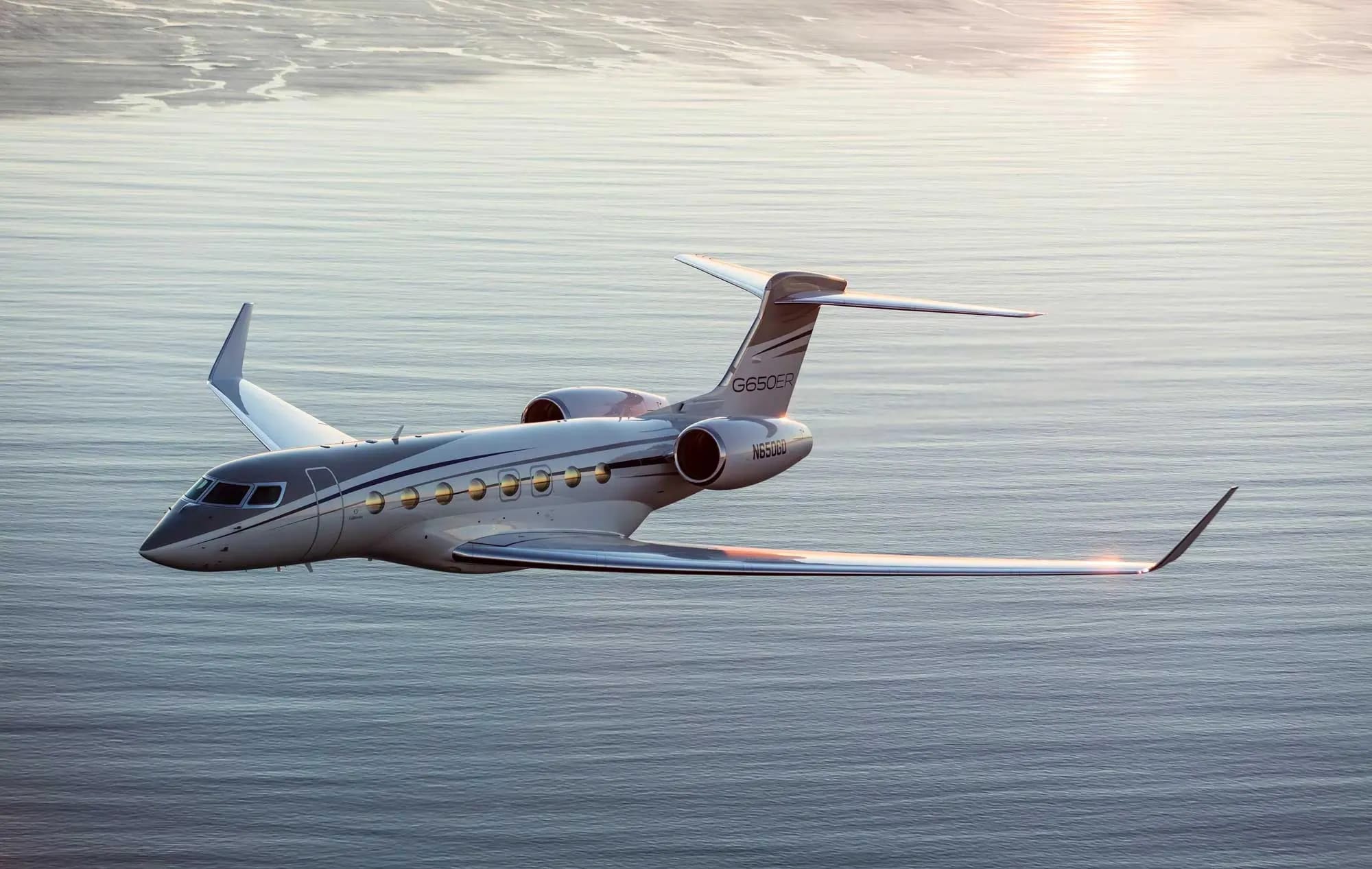
Anticlimax, as it may seem, air taxis already exist . They do so in the form of charter private jets such as the ones we provide our clients with, but also helicopters, hydroplanes and all those that will fly on demand. In fact, the term air taxi defines any form of air transportation that can be chartered to fly on demand.
However, the future is upon us, and we’ll surely need to find more accurate terms to specify what air taxis are. Perhaps a new term will be formed, or the previous association become obsolete. From our perspective, chartered flights are in a distinct league. The technology we’re covering today will reshape not only aviation but mobility itself.
Flying Cars – From the Drawing Book to the Skies
We’re expecting a flying car such as NASA’s Epiphany Transporter to show up above our homes in the near future. It’ll also be quite a sight to see, as eVTOL concepts are present. The Vertical Take-off and Landing solution is essential to make air taxis operate safely.
While looking at where we stand, with autonomous drones and AI rapidly reshaping technology, one of the air taxi issues finds a solution. These will not require human input to manoeuvre, so the odds of crashing on your roof diminish considerably.
Currently, NASA’s solution is perhaps the closest to solving most challenges connected with safety, noise levels, range, speed and dimension. These all performed flawlessly in a wind tunnel, but there is still a long way to go before take-off.
Past and Present Promises on Air Taxis
Airbus tried delivering on air taxis before. The Vahana Project demonstrated that a self-piloted, electric urban air mobility vehicle was possible. After launching in 2015, the 4-year project involved more than 100 experts and achieved over 130 test flights.
The single seater took on the same premises as today’s drones while scaling up to include a human passenger. The project ended in December 2019 and gave way to CityAirbus. As it happens during the development phases, one project ends and serves as the base for the following one.
Where the Vahana Project failed, CityAirbus seems to deliver. The 4-seater evolved to self-piloting technology and an even lower acoustic footprint. Its electric rotors can achieve a 120km/h speed and fly for an estimated 15 minutes. It’s close, but unlikely that this current solution will be the actual flying taxi we need.
With battery technology rapidly evolving, today’s high-tech will soon be obsolete. The air taxi will undoubtedly benefit from lighter, higher capacity solid-state batteries and further solutions that AI will certainly provide. All those areas are rapidly growing, thus offering more and better results at a lower cost.
Kittyhawk - From Google to Air Taxi Trouble
Kittyhawk was yet another promising project. This time, Larry Page, Google co-founder, moved enough funds to elaborate on the same premises as its competitors: a light, autonomous, affordable, omnipresent and environmentally-friendly air taxi.
The team kept the project a secret until 2017, when it revealed Flyer . Unfortunately, this breakthrough wasn’t to be, and in June 2020, the whole program was shut down. Page, however, kept his positions open on companies such as Wisk, which has recently announced its autonomous Air Taxi.
As expected, these are the early days of autonomous eVTOLs, and the rise and fall of such startups is expected until we reach production-level capabilities. In a sense, not all is lost since the know-how and technological implementations advance in time.
These are mere examples in a broader landscape where all aircraft manufacturers and mobility companies are developing their own air taxis. From Airbus to Boeing, Embraer and several others, you can literally find hundreds of projects in all stages of development. Who will win this race? We’re yet to see!
An Example Born out of Autonomous Drones
Drones are no longer fresh news, but at the same time, they don’t stop impressing us with their capabilities. While most of us are looking forward to Amazon’s autonomous drone deliveries, little by little, these machines take up the skies around us.
This summer, Europe already has drones monitoring areas sensitive to wildfires. Simultaneously, authorities deploy surveillance drones across cities to tackle crime and monitor traffic. Like any great technological revolution, it may often go unnoticed until it’s integrated into our lives.
It’s only a matter of time until a flying drone delivers our food and groceries. What was once the subject of a decent – or B-rated – movie is now the reality rapidly built around us.
Down that same line, we won’t be surprised years from now when a flying, autonomous and silent air taxi lands at our doorstep. If anything, our current mobility solutions – cars, buses – may seem all too dated.
Dubai and XPeng - Close to Airworthiness
The Chinese XPeng X2, a two-seater flying car, completed its inaugural public test flight at the GITEX technology expo in Dubai in late 2022. Propelled by eight vertical lift propellers, this electric vehicle can ascend at approximately two meters per second and achieve speeds of up to 80 miles per hour.
Although the test flight lasted only 90 seconds, XPeng Aeroht’s Chief Aviation Specialist, Liu Xinyin, expressed that the technology is nearing readiness for public use. However, regulatory frameworks for flying cars still require development, as mentioned throughout this article.
XPeng intends to collaborate with governmental bodies to establish the necessary regulatory infrastructure, aiming to enable limited and regulated use of flying cars within urban areas in about five years. This timeline aligns with the ambitious goal set by the Chinese government to introduce flying taxis by 2025.
How About Private Jets?
Private jets are also down the line for a rethink. Projects such as Lilium offer a flying solution for up to six passengers. Versatile and already on its fifth generation, it’s definitely a solution that could redefine private air travel. Its principles take on much of the lessons learned from lightweight jet technology and implement them perfectly in its concept.
The zero-emission jet addresses a few of private aviation’s most significant challenges. And while technology keeps focusing on reducing private jet emissions, achieving zero would be nothing short of extraordinary. An efficient, low-cost, carbon neutral and silent aircraft is one we can’t wait to see.
Again, while we’re not at that stage yet, the road towards that goal has never been shorter. Plus, private jet operators are amongst the earliest tech adopters in aviation, which means it will be rapidly implemented whenever that first solution arrives on the market.
And while we’d all love to see a version of Tesla take up to the skies, it should take a few years to look up and see an air taxi fly by. Hopefully, we will keep updating you on the latest news and trends earlier than late and discover together what’s next.
The Greatest Question Around Air Taxis: How About Safety?
When you think about taxis, you’d be forgiven if the concept takes you to reckless driving memories and less-than-excellent customer service. We’ve all been there, so let us assure you that the term taxi shares very little with its current counterparts.
Throughout this article, we pointed out the implementation of autonomous flight. Flying machines are anything but easy to control. Pilots take on the challenge of learning about weather, physics and dynamics, systems and redundancies, and many other areas before they take off from the ground.
However, consider current developments in autonomous driving. With Tesla being the obvious example, such technology was unthinkable only ten years ago. Now, it’s not a question of if , rather than the question of how perfectly it works .
The same can be said about air taxis. With the aid of AI, even commercial aviation stands before a revolution. In many ways, we all do in a far broader sense than mobility. Such challenges for us humans are mere parameters for technology. As a result, autonomous flight will happen, and it will be extraordinarily safe, in our opinion.
Final Thoughts
Mobility remained unchanged at its core for the past century. Automobiles and aircraft remain the same, bar their undeniably technological advances.
Upscaling drones and turning them into air taxis is a groundbreaking solution. We’ll utilise the best current technology, including lightweight high-capacity batteries and Artificial Intelligence, to look after the safe navigation of such vehicles.
While the last few decades seemed centred on the internet and virtual solutions, we are at the breaking point of a true mobility revolution. With EVs already a reality and several other valuable solutions, such as hydrogen-powered engines, a small flying machine that can carry passengers is one step further into the future.
And while we’re looking into ways to land the first humans on Mars in the next decade, we can’t stop focusing on solving current issues. A zero-emission flying machine is one we can’t wait to see.
In the meantime, your travel needs can be answered by the latest and most efficient private jets in the market. Contact us today for a free quote and make the most of your travel arrangements with some of the finest human-operated aircraft in the world.